The Soft Architecture of Forgetting: Masaaki Yuasa’s Kaiba
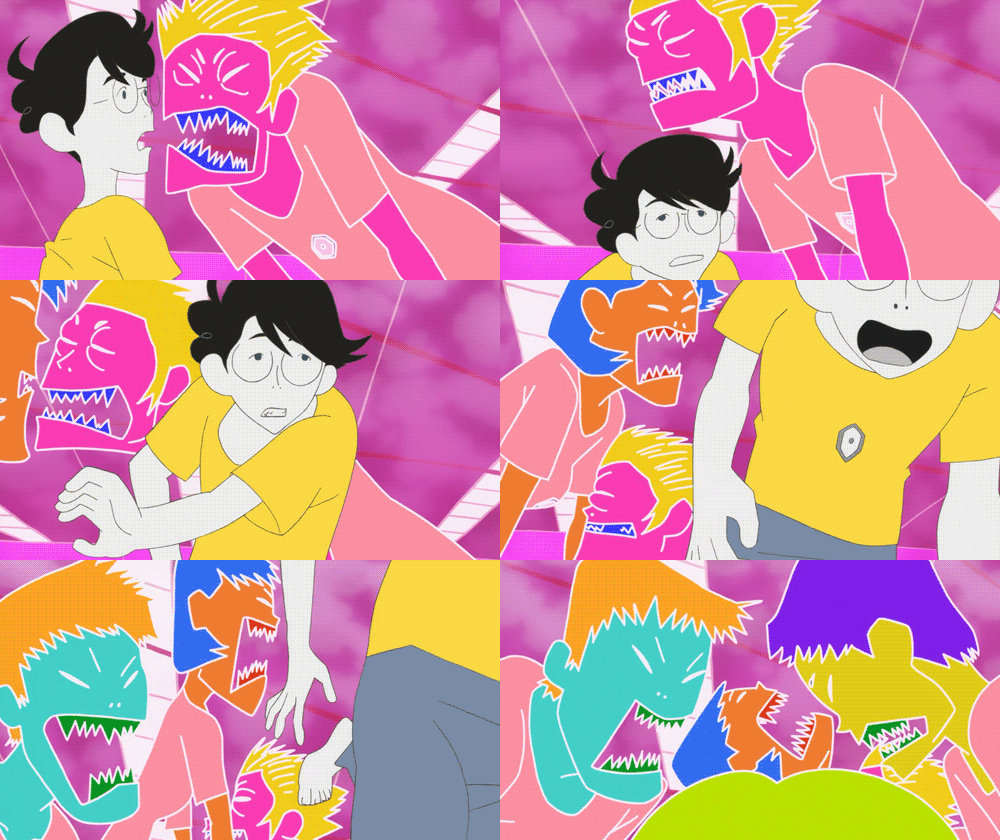
In 2008, Masaaki Yuasa directed a twelve-episode series for Madhouse that treated the body as a disposable vessel and memory as a commodity. Kaiba remains one of the most radical original anime of its decade, yet it has never quite entered the mainstream conversation. Its visual language—rounded, childlike forms set against dystopian inequality—still feels like a private language spoken only by those who have sought it out.
Visitors to the Brooklyn Museum can currently encounter manga on the scale of fine art. The exhibition Art of Manga, running until 31 January 2027, is the first major show in the Americas to treat the form as a serious artistic medium, gathering more than six hundred original drawings. Timed tickets may be reserved at the museum’s site.
The Weight of an Empty Chest
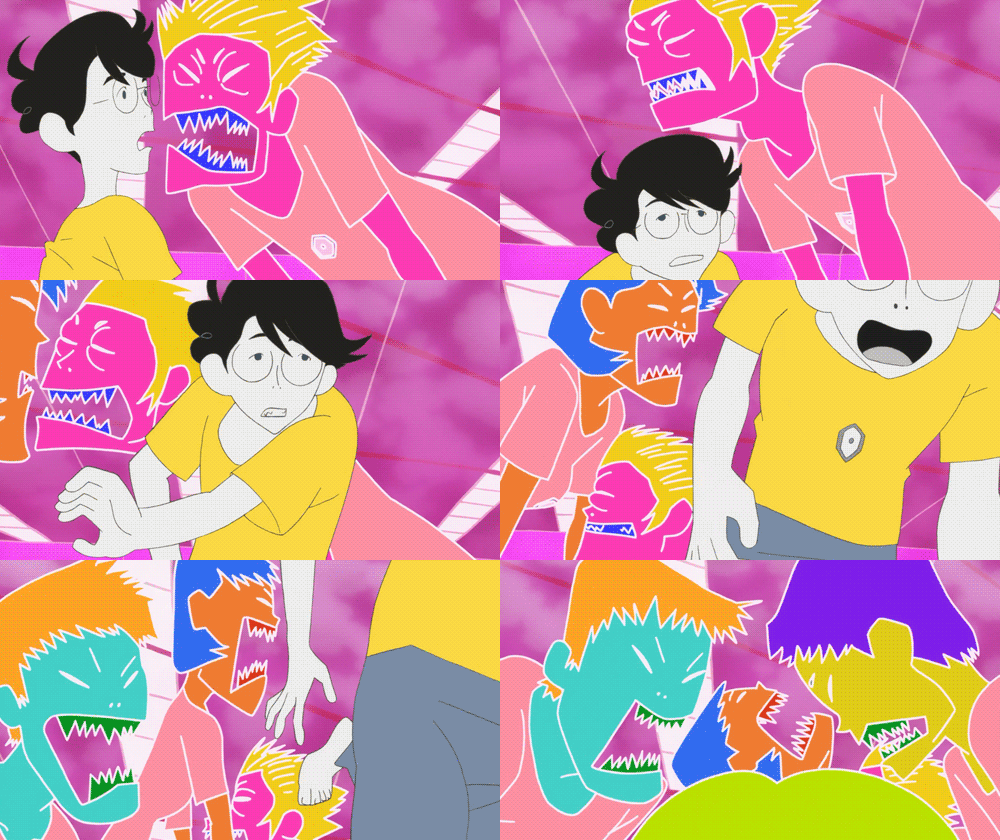
A young man wakes in a ruined room with a hole through his torso, a mark on his stomach, and a locket containing the blurred face of a girl. He is given the name Warp. In the world of Kaiba, consciousness can be extracted onto small chips and transferred between bodies; death is provisional, and identity is a transaction. Yuasa’s designs are deliberately soft, almost toy-like, which makes the violence of the system more unsettling. Bodies are harvested, memories are edited, and the wealthy live above the storm clouds while the poor scramble for remaining vessels. The series refuses the usual mecha or cyberpunk aesthetics of Japanese science fiction, preferring a palette of pastels and rounded lines that recall children’s illustration even as the narrative darkens. What emerges is a quiet argument about who is permitted to possess a continuous self. The hole in Warp’s chest is both literal absence and metaphor for the gap between a person and the memories that once defined them. Yuasa and his team at Madhouse built the entire series around this tension, allowing the animation itself to stretch and compress as bodies change hands.
Travelling Through Borrowed Flesh
Once Warp escapes the initial city, the series becomes a picaresque journey across planets and social strata. He is transferred into the body of a stuffed hippo, then into the form of a young woman named Chroniko. Each new vessel brings a different social position and a different set of constraints. The animation, credited to character designer Nobutaka Ito under Yuasa’s direction, treats the human outline as malleable clay; faces elongate, limbs soften, and colour shifts to signal the emotional weather of the chip currently in residence. These sequences are among the most inventive of Yuasa’s early television work, predating the more widely seen The Tatami Galaxy. Viewers watch identity being rewritten in real time, not through exposition but through the physical deformation of the drawing itself. The soft line work that initially seemed merely charming becomes a precise instrument for showing how power operates on the body. When a memory is erased or altered, the screen registers the change as a slight tremor in the outline, a loss of detail, a softening of expression.
What Remains When the Chip is Removed
By the later episodes the series turns toward the question of whether any core remains after successive transfers. The girl in the locket, Neiro, is revealed to be connected to a radical group that seeks to free memories from bodily imprisonment altogether. Yuasa withholds full explanations until the final stretch, trusting the audience to assemble the political and personal stakes from fragments. The result is less a conventional plot than a sustained meditation on class, desire, and the ethics of longevity. Because the series was conceived as an original work rather than an adaptation, Yuasa could shape both image and narrative without external constraints; the visual style and the philosophical argument are inseparable. Kaiba has never received the commercial push of more accessible science-fiction anime, and its reputation has grown largely through word of mouth and belated streaming availability. It stands as evidence that original anime can still function as a laboratory for ideas that resist easy packaging.
To watch Kaiba is to be reminded that animation’s greatest power may lie not in spectacle but in its capacity to make the body feel provisional. The series leaves open the possibility that continuity of self is less a given than a privilege, distributed unevenly across a society that has learned how to price the contents of a mind. Whether that insight remains confined to a small circle of viewers or eventually finds a wider audience is a question the work itself does not answer.