From Slime Lords to Reasoned Beasts: Japan’s New Manga Volumes This Week
Bookshops across Japan are stacking roughly 370 new tankōbon (the official Japanese term used to describe a collected manga volume) between 5 and 10 October 2026, a week that runs from a fifty-first volume of demon-school comedy to a long-awaited camping return and a fresh animal fable from the creator of BEASTARS. These are not teaser chapters dropped into a magazine; they are the collected instalments readers have been queuing for, timed against anime seasons, a live-action drama and a theatrical announcement. What follows is a shelf’s worth of the titles that actually move the conversation.
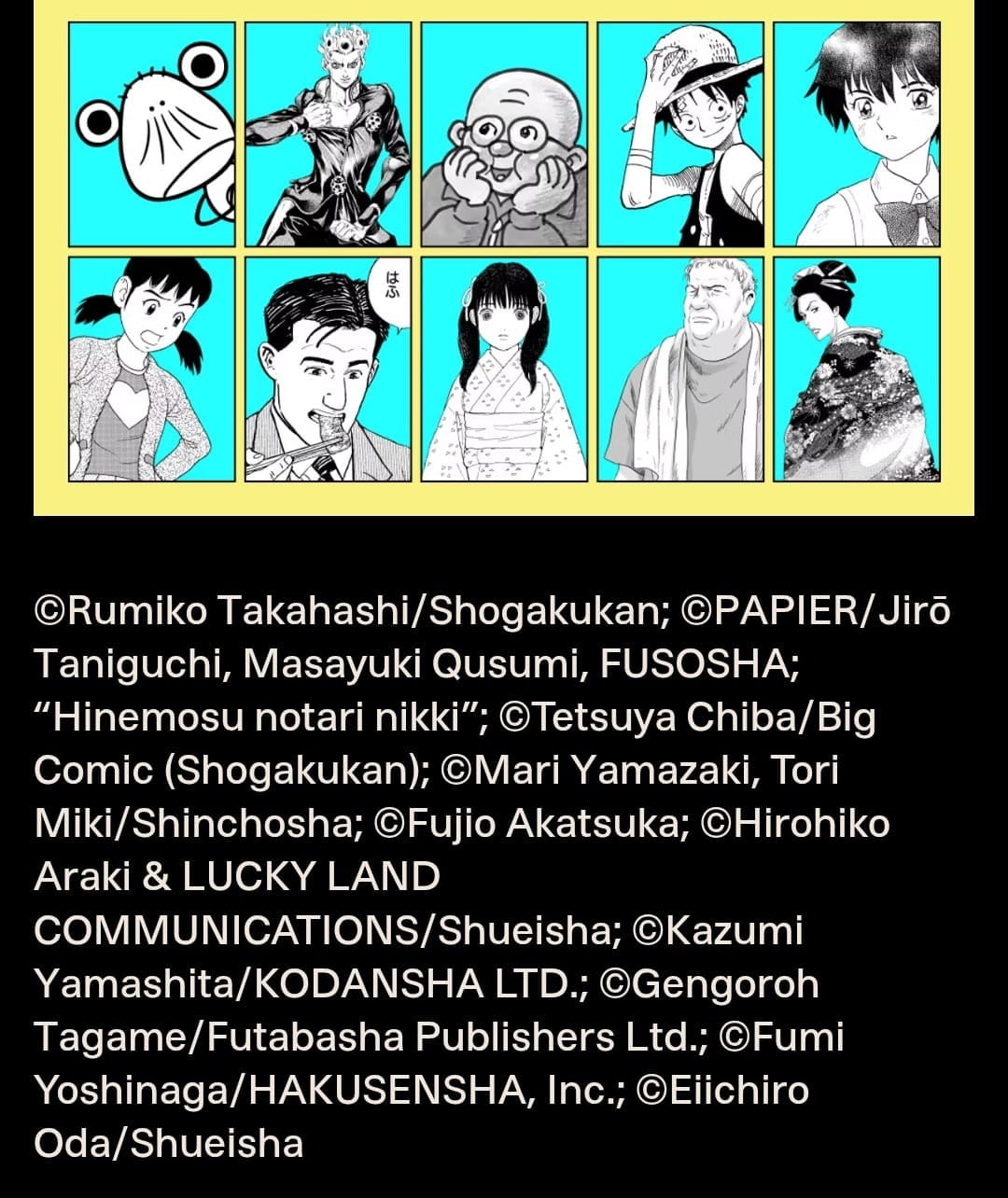
Before the new volumes, a reminder that each manga page itself is a fine form of art. Art of Manga at the Brooklyn Museum — the first major exhibition in the Americas to consider manga as a fine-art form — opened on 3 October 2026 and runs until 31 January 2027. More than 600 original drawings, from Akatsuka Fujio and Chiba Tetsuya to Rumiko Takahashi, Hirohiko Araki, Eiichiro Oda, Fumi Yoshinaga and Junji Ito, fill the Great Hall. Timed tickets are required. Reserve a place here.
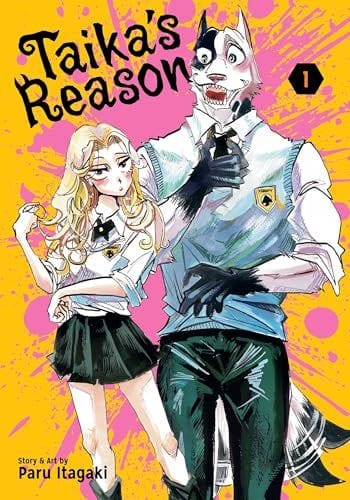
Taika’s Reason, Volume 8 — Paru Itagaki
Paru Itagaki arrived as a sensation with BEASTARS (2016–2020), the Cherryton Academy drama in which carnivores and herbivores share a school and a fragile social contract. Around it she built Beast Complex, the autobiographical Paru no Graffiti, the short serial Drip Drip, and Sanda (2021–2024), a Christmas-figure myth later adapted for television. Taika’s Reason (Taika no Risei), serialised in Weekly Shōnen Champion since January 2025, returns her to anthropomorphic bodies, this time in a Japan where a falling birth rate has pushed people towards humanised pets — and towards the “miman”, animals who have not fully become people and are treated as a social problem.
Volume 8, out on 7 October, pushes that premise past the domestic quarrel. Earlier books had Taika, a cat-person, circling the truth of a father’s death, then watching Tsunayoshi’s bond with Ryusei crack into an argument. The new collection follows a kidnapping: Ao is taken, Taika loses the restraint the title promises, and the fight with Tsunayoshi turns physical. Itagaki is asking, more bluntly than in BEASTARS, what “reason” is worth once the person you love is missing.
That Time I Got Reincarnated as a Slime, Volume 33 — Fuse and Taiki Kawakami
The isekai that swallowed a decade began as a web novel by Fuse, then a light novel illustrated by Mitz Vah, then the manga drawn by Taiki Kawakami for Kodansha’s Monthly Shōnen Sirius. Rimuru Tempest — a salaryman reborn as a slime who gathers a nation of monsters — has carried an anime through a fourth season planned across five cours. Kawakami’s clean, crowded battle pages are what most readers outside Japan actually know.
Volume 33 lands on 8 October, while that fourth season is still on air. The collected chapters move the Tempest polity further into the diplomacy and open war the later novels have been building: allies who are no longer simply grateful, and a slime whose administrative genius is starting to look like a liability. It is the volume for anyone who stayed for the nation-building rather than the power fantasy.
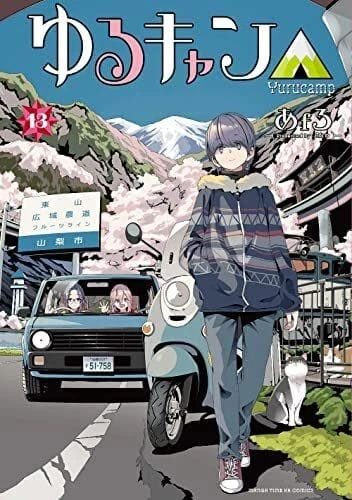
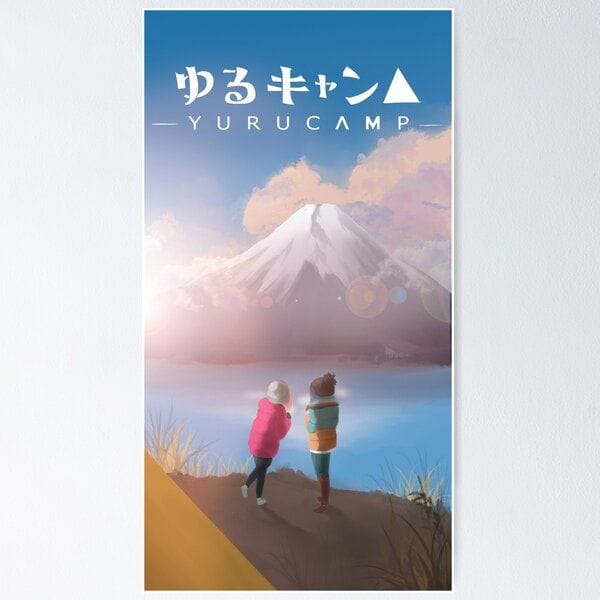
Laid-Back Camp, Volume 19 — Afro
Afro (also credited as Afro Tanaka) made a quiet name with the gag spin-off Puella Magi Homura Tamura before Laid-Back Camp (Yuru Camp) turned outdoor gear catalogues into a feeling. The Outdoor Activities Club of Motosu High — Nadeshiko Kagamihara, Rin Shima and the rest — has carried three anime seasons, a film, and a fourth season slated for 2027. A sister series, mono, shares the same unhurried eye. In July 2026 both manga paused after Afro’s health worsened under the strain of drawing them together; the volumes already drawn are still reaching shops.
Volume 19 arrives on 9 October. Volume 18 had split the club between a Gunma trip (Lake Nozori, hot springs, a night sky) and Rin’s touring camp with Ayano towards Lake Suwa. The new book continues that double itinerary: more roadside food, more weather, and the particular Afro pleasure of a campsite described as carefully as a face. It reads, this autumn, like a dispatch from a series that has chosen to go slowly.
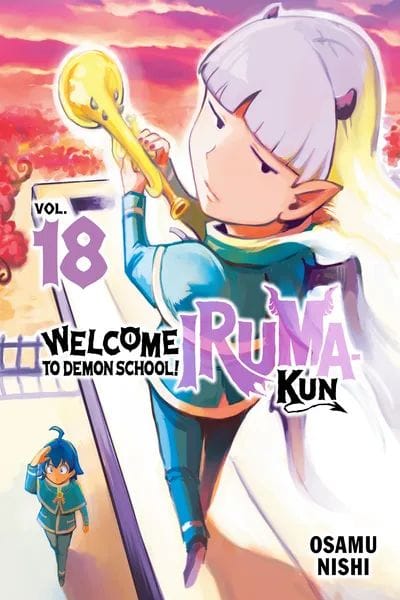
Welcome to Demon School! Iruma-kun, Volume 51 — Osamu Nishi
Osamu Nishi spent years on shorter Champion serials — Shōnen K, Rental Butler, Getmarry, Hotel Hellheim, Dead An Dead — before an editor seized on a plot about a child starting school. Since March 2017, Welcome to Demon School! Iruma-kun has followed Iruma Suzuki, sold to a demon by his parents and enrolled at Babyls. Nishi has since written Ichi the Witch (art by Shiro Usazaki) and overseen spin-offs, including if Episode of Mafia, whose anime is due in January 2027.
Volume 51 is out on 7 October, with volume 9 of the Mafia spin-off beside it. Fifty volumes in, Babyls is no longer an orientation gag: rank exams, the Thirteen Crowns and Iruma’s refusal to become the wicked demon everyone expects have turned the comedy into a school epic. The new book keeps that balance — a punchline, then a promotion that costs someone something.

The Ancient Magus’ Bride, Volume 25 — Kore Yamazaki
Kore Yamazaki’s breakthrough remains The Ancient Magus’ Bride (Mahoutsukai no Yome), serialised in Monthly Comic Garden and among the defining fantasy manga of the 2010s: Chise Hatori, sold at auction, bought by the skull-faced mage Elias Ainsworth, and slowly becoming a mage rather than a purchase. The anime, and its second season at the College, carried the story to a wider audience. Yamazaki’s earlier short work already favoured folklore over spectacle; the long serial made that taste a career.
Volume 25, released on 8 October, sits deep in the College arc and its aftermath. The new chapters test what Chise’s apprenticeship means once she is no longer only Elias’s pupil — neighbours, curses and the ethics of a bride who was once a commodity. It is a quieter book than the slime wars on the same day’s shelf, and more exacting.
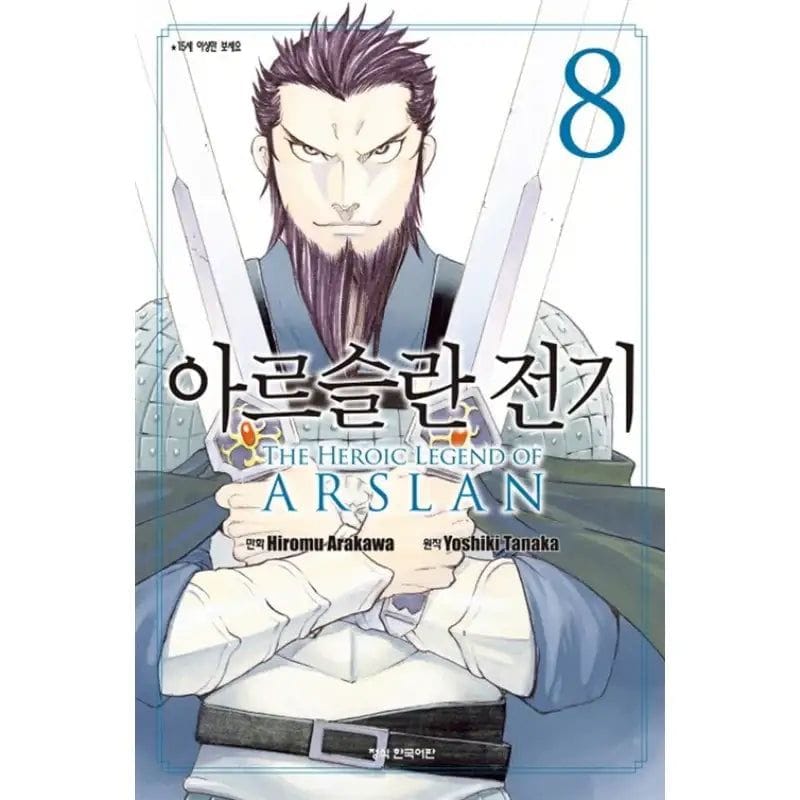
The Heroic Legend of Arslan, Volume 25 — Hiromu Arakawa, after Yoshiki Tanaka
Hiromu Arakawa drew Fullmetal Alchemist, then Silver Spoon, and has spent years adapting Yoshiki Tanaka’s The Heroic Legend of Arslan — the same novelist behind Legend of the Galactic Heroes. Her Pars is a kingdom of cavalry, faith and displaced princes; Prince Arslan’s education is the plot. Earlier adaptations (by Chisato Nakamura, and an anime) never had Arakawa’s architecture: war as logistics, faces as politics.
Volume 25 arrives on 8 October. The collected chapters advance the campaign for Pars and the brittle alliances around a prince who still refuses to rule as his father did. Arakawa’s gift here is the same as in Amestris: a battle page that is really a conversation about what a country owes the people it conscripts.

Grand Blue, Volume 27 — Kenji Inoue and Kimitake Yoshioka
Kenji Inoue writes and Kimitake Yoshioka draws Grand Blue (Grand Blue Dreaming), the Izu diving-club farce serialised in good! Afternoon since 2014. Iori Kitahara arrives for a quiet university life and is immediately stripped, drunk and enrolled in the Peek-a-Boo club. Yoshioka’s other work is mostly this book’s faces; Inoue has kept the gag machinery running long enough for a live-action film and an anime whose fourth season has now been announced. A spin-off, Grand Blue Dreaming side stories, continues alongside.
Volume 27 is out on 7 October. The new chapters stay with the club’s talent for turning a training weekend into a public indecency case, while the season-four news gives the volume a second life as a catch-up brick. Under the shouting, Inoue is still writing a comedy about friendship that only functions when everyone is slightly ashamed.
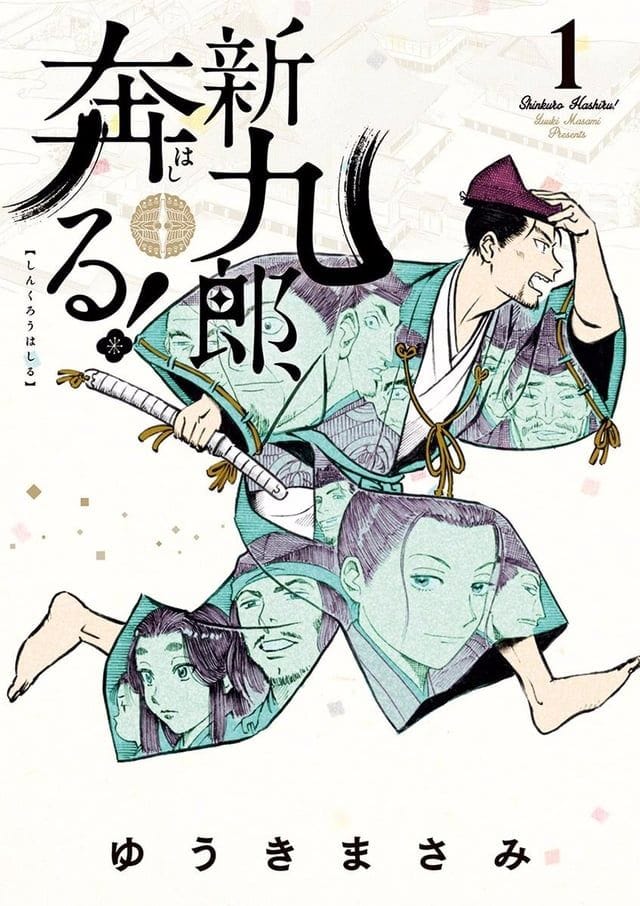
Shinkuro, Hashiru!, Volume 24 — Masami Yuuki
Masami Yuuki is the Patlabor man: Mobile Police Patlabor defined a generation of mecha that had to file paperwork, and Kyūkyoku Chōjin R showed the same fondness for systems under strain. Shinkuro, Hashiru! (Shinkuro, Run!) is his later historical serial for Shogakukan’s Big Comics, following a Sengoku-era runner whose talent is speed and whose problem is everyone who wants to use it. Volume 24 reaches shops on 9 October, the same Friday as Laid-Back Camp 19 and a new Usamaru Furuya book, Yumeji Ehon.
The new volume keeps Yuuki’s habit of treating history as a workplace. Battles matter less than the errand, the road and the person who will be blamed if the message arrives late. It is the week’s quietest argument that manga craft is not only the monster page.
Set these volumes beside the drawings now hanging in Brooklyn and the week looks less like a release calendar than a single argument continued in two rooms. Itagaki’s animals, Arakawa’s princes and Afro’s camp stoves are being sold as entertainment in Tokyo while, until 31 January 2027, their tradition is being asked to hold a museum wall. The interesting question is not whether manga counts as art. It is which of this week’s pages would still be legible if you took the speech balloons away — and which ones were never really about the balloons at all.