
The Ink That Reads the Gods: Fibi Dori’s Graphic Pilgrimage in The Oracles of Kami
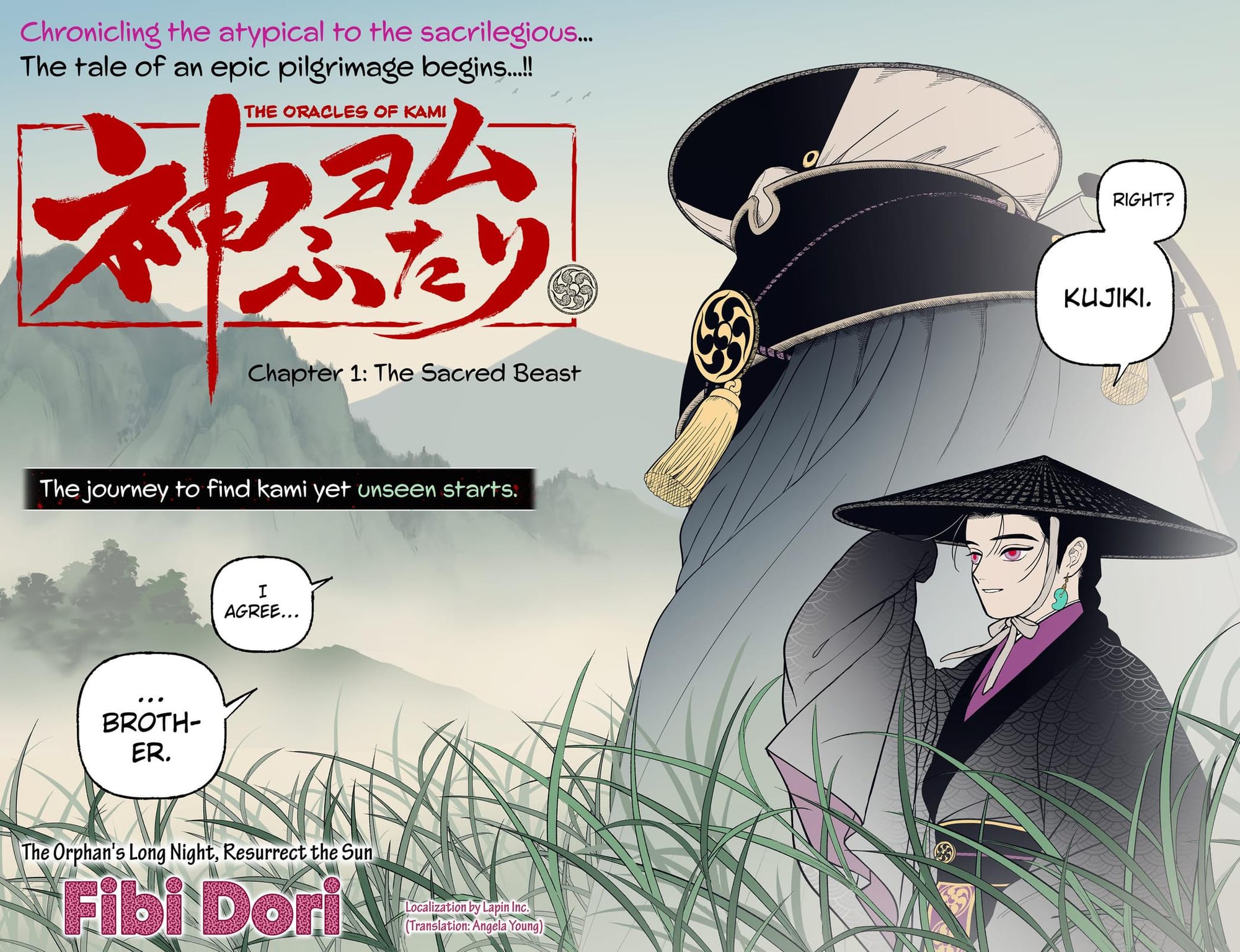
Miyato, the oracle who can touch a relic and extract the memory of a god, travels with his enormous, snow-white brother Kujiki through a landscape where folklore still bites. Their pilgrimage, commissioned by the Emperor, brings them to a mountain village convinced that the long-extinct sacred beast Arahabaki has returned to devour the living. What unfolds is less a monster hunt than a careful reading of divine intent.
The Sacred Beast and the Village That Fears It
The opening chapters establish a world in which kami are neither wholly benevolent nor purely predatory. Arahabaki, once hunted nearly to extinction for its fur and flesh, is now rumoured to be punishing the village. Miyato does not draw a blade; he prepares to “read” the beast, to sift its motives from the residue of ritual and rumour. The atmosphere is thick with moral ambiguity: the villagers may have reasons to fear the creature, yet the creature may have reasons to strike. Fibi Dori’s narrative refuses the easy binary of shonen combat, preferring the slower tension of an investigation conducted through touch and memory. Early pages already suggest that the cost of reading the gods may be a gradual erosion of the reader’s own humanity, a quiet erosion that the brothers carry between them as they move from village to village.
Brothers of Bone and Fur
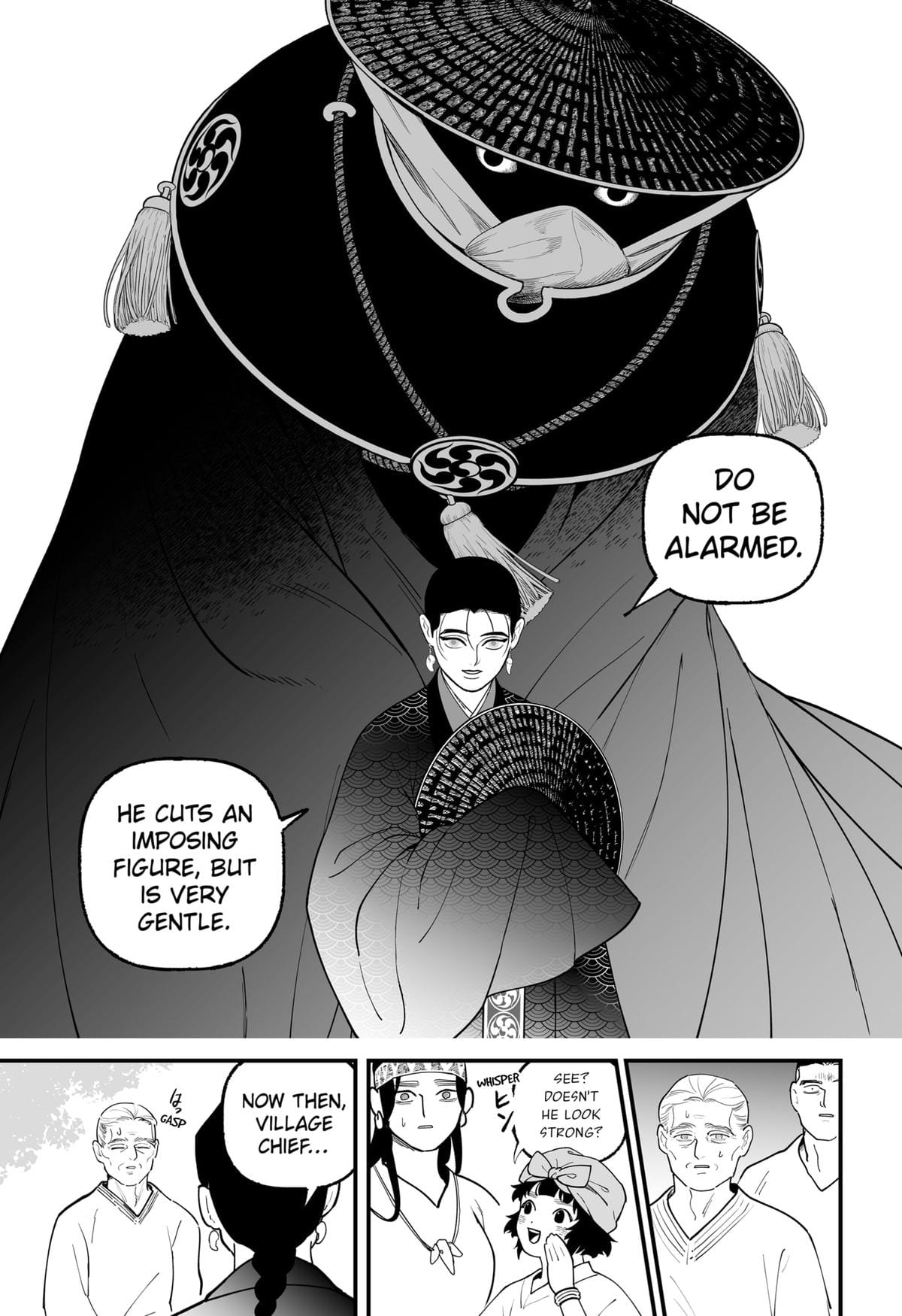
Miyato is slender, composed, dressed in layered robes that carry the weight of his office as kannagi. His younger brother Kujiki is a towering, luxuriantly furred figure whose sheer physical presence makes him both protector and enigma. The pair travel under imperial order, cataloguing the pedigrees of local deities; their bond is fraternal yet oddly asymmetrical, the smaller brother reading what the larger one cannot quite articulate. One fan remark on the second volume playfully notes that the elder brother can become an elder sister, a gender-shifting detail that sits lightly within the folklore rather than as spectacle. The setting itself is a Japan of coastal paths, mountain hamlets and half-forgotten shrines, where superstition and imperial decree coexist. Kujiki’s bulk is not merely comic relief; it is a living archive of the wild that Miyato must continually interpret.
The Author’s Line and Its Allredian Echo
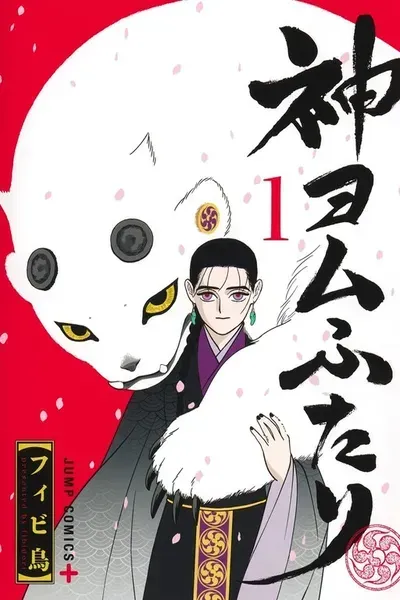
Fibi Dori, whose earlier one-shots such as “The Lying Carpenter and the God Tree” and “Ham Girl’s Adventure” earned quiet acclaim on Shonen Jump+, brings to this first serialisation a graphic clarity that feels almost poster-like. The cover of volume one—bold red field, high-contrast calligraphy, a white beast whose eyes and markings read as emblems—carries the same iconic force that Mike Allred brought to X-Statix. Allred’s figures are reduced to essential contours, their faces and costumes functioning as graphic signs rather than anatomical studies; Dori’s characters share that reduction. Outlines are decisive, patterns on fabric and fur are treated as flat design elements, and emotional states are conveyed through the angle of a brow or the placement of a hand rather than elaborate cross-hatching. The result is a visual language that feels both traditionally Japanese in its decorative restraint and unexpectedly close to the American pop-art comic of the late 1990s. Readers who know Allred’s work will recognise the pleasure of a line that refuses to vanish into the narrative.
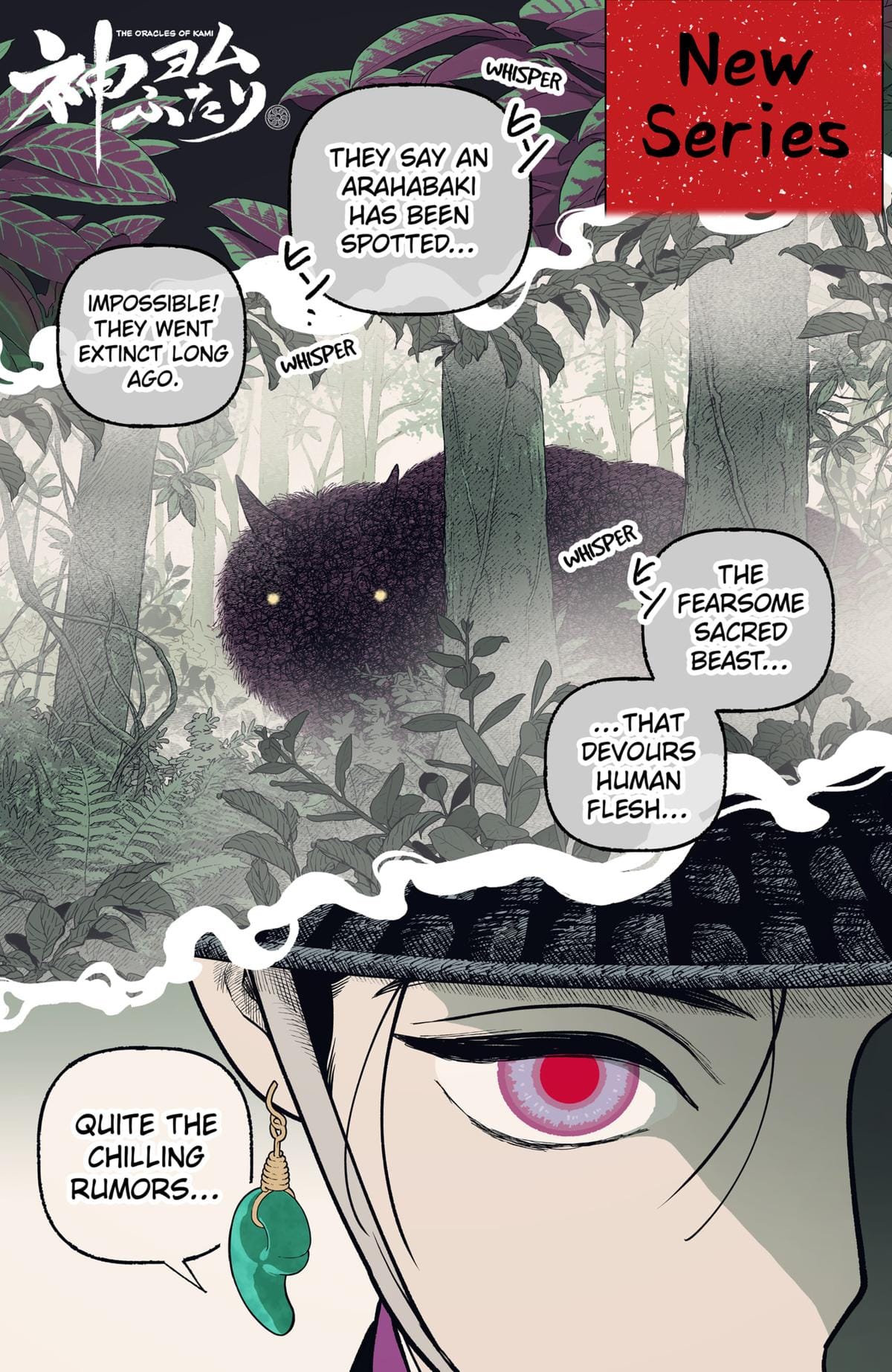
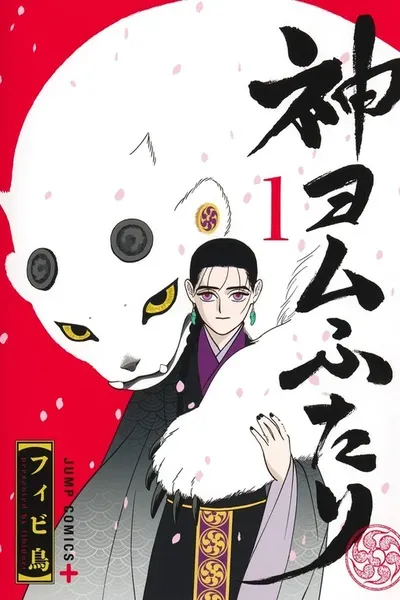
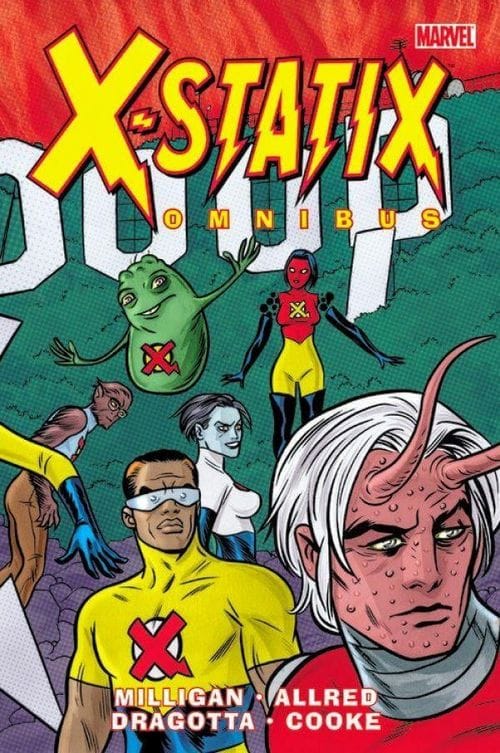
Comparing Fibi Dori to Allred drawing style
What remains after the brothers leave the village is the question of whether a god can ever be fully read, or whether every reading is itself a form of creation. Dori’s clean, emblematic line suggests that the act of looking—whether at a panel or at a shrine—may be the closest we come to understanding.

Those who wish to see manga treated with the same seriousness as any other graphic art may do so at the Brooklyn Museum’s Art of Manga exhibition, the first major presentation in the Americas to frame Japanese comics as fine art. Running until 31 January 2027, the show gathers more than six hundred original drawings. Tickets and reservations are available at