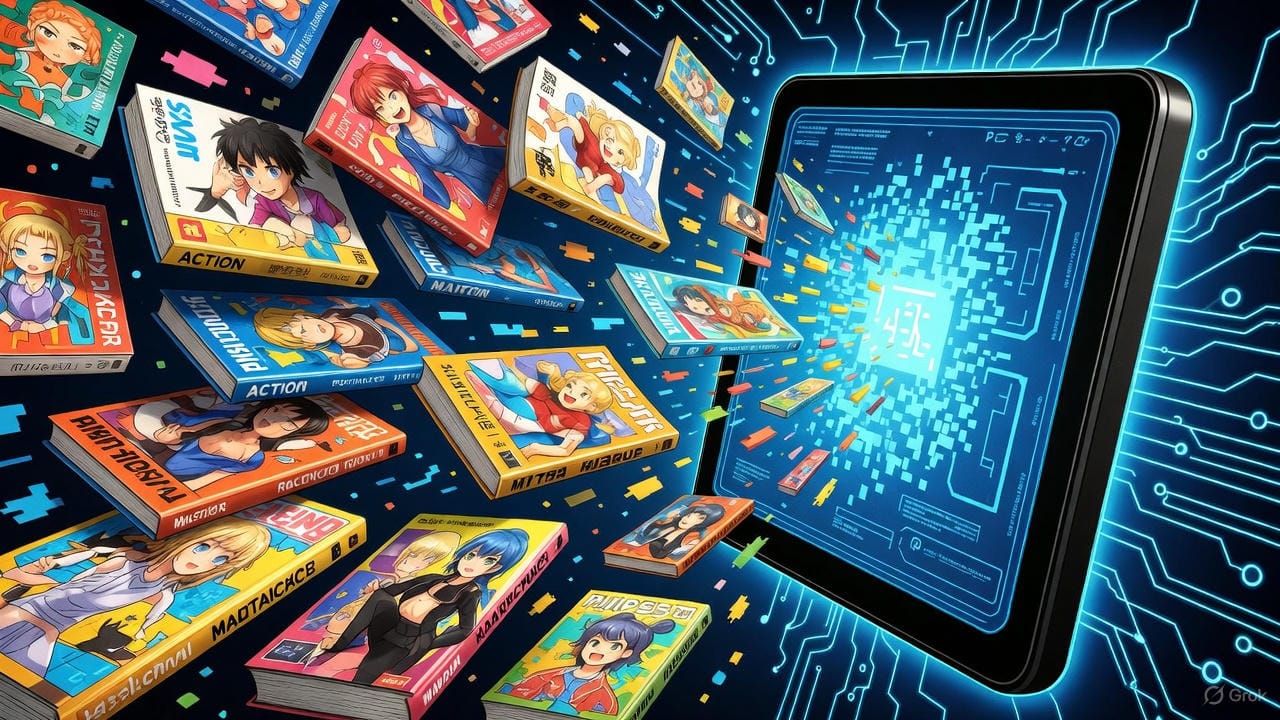
2025 Manga Market Shifts: Emerging Digital Platforms and Their Impact
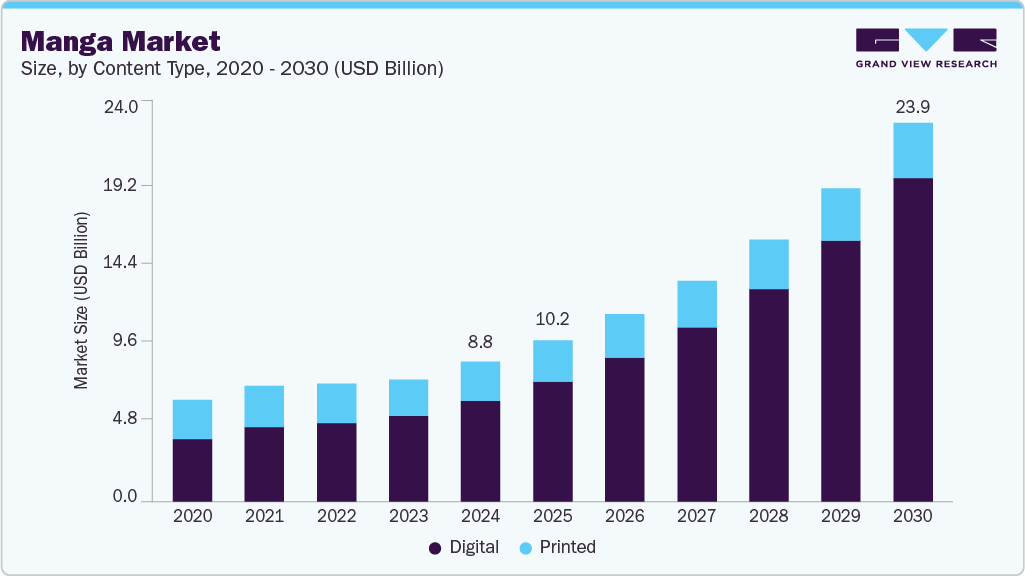
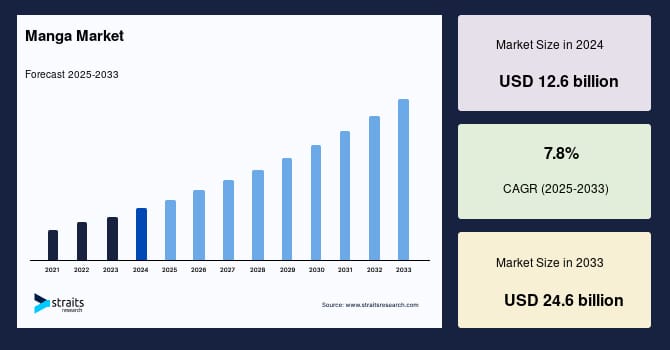
In the United States (USA) The manga market in the USA is experiencing explosive growth, with an estimated value of around 1.2 billion USD in 2024 and strong projected increases (CAGR around 24-25% until 2030). Traditional players still dominate (Viz Media, Kodansha USA, Yen Press, Seven Seas Entertainment, Dark Horse Comics), but the new entrants in recent years have primarily focused on digital manga aggregators:

- Crunchyroll (Sony subsidiary):
Launch Date: October 9, 2025 (mobile app for iOS and Android in the US and Canada; web version followed on October 15).
Description: A premium digital manga reading service operated by Crunchyroll (Sony-owned). This is a revival and major expansion of their previous manga service (which ran from 2013–2023 and shut down). It's positioned as an add-on for Crunchyroll subscribers, offering ad-free access with offline downloads.
Key Features: Aggregates titles from multiple publishers in one app, including VIZ Media, Yen Press, Square Enix, AlphaPolis, COMPASS, Titan Manga, J-Novel Club, and more. Launch catalog included hundreds of series (e.g., One Piece, Jujutsu Kaisen, Delicious in Dungeon, My Dress-Up Darling).
Impact: Aims to consolidate fragmented subscriptions by providing a "one-stop" library, leveraging Crunchyroll's anime audience.

- Manga Mirai :
Manga Mirai (also styled as MANGA MIRAI)
Launch Date: March 4–5, 2025 (in the US; later expansions).
Description: A joint digital manga distribution platform developed by Media Do, NTT Docomo, Akatsuki Group, and MyAnimeList. It's a purchase-based service (buy volumes or chapters).
Key Features: Launched with over 11,000 volumes across 780+ titles from publishers like Kodansha USA, Square Enix, and later additions including VIZ Media, TO Books (exclusive English debuts), J-Novel Club, Shufu to Seikatsu Sha, and weavin (webtoons). Popular series include Wind Breaker, Blue Lock, and exclusives like I Want to Be Pampered by the Marquis of Ice!. Integrated with MyAnimeList for marketing and recommendations.
Impact: Focuses on broad catalog aggregation and exclusive licenses, targeting English-speaking fans with discounts and promotions.
Square Enix and Kodansha are strengthening their presence with new titles and apps, but these are expansions rather than true new entrants.
Digital already accounts for more than 80% of the US market, favouring these platforms.
In Japan
The Japanese market remains the largest (over 700 billion yen in 2024, a historic record), dominated by longstanding giants (Shueisha, Kodansha, Shogakukan, Kadokawa, Square Enix). Few purely new players have emerged in 2024-2025, as the sector is mature and increasingly focused on digital (which is gradually eroding print).
- Government initiatives: In December 2025, the Japanese government allocated a budget to create a "unified global digital distribution platform" for manga, through an industry-government-academia consortium. This aims to unite existing publishers in the fight against piracy and to boost exports.
- New digital labels: Companies like HIKE are launching labels (COMIC ELAN, Blossom, BLUE BELL) for digital; expansions at BookLive or other existing services.
- Sony strengthens Kadokawa (10% stake in 2024), indirectly impacting production.
No major disruption from new independent publishers; growth comes from digital and exports.
In the rest of the world (global, excluding Japan/USA)
Growth is strong in Europe, Latin America, Southeast Asia, and elsewhere, driven by digital and anime adaptations. The global market reaches approximately 15-19 billion USD in 2024-2025, with a CAGR of 18-20%.
- Crunchyroll Manga and Manga Mirai : Global rollouts, enhancing digital access.
- Platforms such as Bilibili Comics (China, with global influence), Webtoons (Korean, but impacting vertical manga-like formats), and Manga Plus (Shueisha, free with simulpub).
- Regional expansions: Kodansha launches apps in Canada/Europe; anti-piracy initiatives and increased localisation are expanding legal offerings.
- New via partnerships: Sony/Kadokawa and cross-investments are facilitating global distribution.
The new players are mainly digital platforms and consortia, rather than traditional publishers. The key trend is the shift towards digital, simulpubs (simultaneous Japan/worldwide releases), and efforts to combat piracy to support Japanese exports. The market remains dominated by Japanese publishers through their international subsidiaries.
Impact of Webtoons on the Manga Industry
Japan Becomes Webtoon's Top Market: What It Means for Traditional Manga Webtoons, originating from South Korea and optimised for vertical scrolling on smartphones (infinite scroll, often in colour), have been exerting a growing influence on the Japanese manga market since the 2010s. This digital format, popularised by platforms such as Naver Webtoon and Kakao Piccoma, is challenging the traditional manga model (black and white, horizontal reading, publication in magazines followed by printed volumes). In Japan: Direct Competition and Forced Adaptation Japan, the birthplace of manga, has seen webtoons gain ground dramatically: - In 2024-2025, Japan has become the top market for Webtoon Entertainment (Naver), surpassing even South Korea. The LINE Manga platform (Naver subsidiary) generated the highest revenue in 2024 and became the most profitable non-gaming app in Japan in the first half of 2025. - Piccoma (Kakao) and LINE Manga dominate the Japanese digital market, with explosive growth (projected CAGR of 25% for webtoons in Japan until 2030). - This is prompting traditional Japanese publishers to respond: Shueisha (One Piece, Naruto) launched Jump Toon in May 2024, while Kodansha and Kadokawa have created dedicated departments for "tate-scroll comics" (vertical webtoons), alongside massive investments in webtoon studios. Webtoons particularly attract young mobile readers, with innovative business models (limited free episodes, then paid). As a result, digital is eroding print sales, and some mangaka are experimenting with the vertical format to reach a global audience more easily. On Creation and Narrative Style - Accessibility for Creators: Unlike traditional manga (often through strict magazines and editors), webtoons allow direct and independent publication. This is inspiring mangaka to adopt a more democratic model. - Stylistic Influence: Vertical scrolling changes narration (smoother rhythm, frequent cliffhangers, vibrant colours). Japanese digital manga are now incorporating these elements, and some traditional titles are being adapted into webtoon format. - Themes and Genres: Webtoons, often more contemporary sub traditional manga themes (modern romance, isekai, social issues like bullying), are refreshing the market and influencing recent manga. On Anime Adaptations and the Global Market - Many successful webtoons (Solo Leveling, Tower of God, The God of High School) are adapted into anime by Japanese studios, boosting their visibility and proving the format can rival manga for adaptations. - In 2025, LINE Manga plans 20 anime adaptations of webtoons, strengthening Korea-Japan collaborations. - Globally, webtoons contribute to the "Hallyu" (Korean wave) and compete with manga in the West and Southeast Asia, with faster growth thanks to mobile optimisation.
In Summary: Complementarity Rather Than Replacement
Digital aggregators and webtoons are not “replacing” traditional manga – the Japanese market remains firmly dominated by classic titles in both print and digital formats – but they are accelerating digitalisation and compelling the industry to innovate at a rapid pace. These new platforms broaden the overall offering, attract fresh audiences (particularly younger readers and women), and foster stylistic hybridisation. In the long term, we are witnessing a fruitful convergence: more manga adopting vertical scrolling and full-colour elements, alongside healthy competition that enriches the entire ecosystem of Asian comics. Manga retains its status as the undisputed giant in terms of market size and cultural influence, yet webtoons have emerged as the primary engine of digital growth.
However, behind this visible transformation lies a player that is rarely discussed yet increasingly decisive: the servers, cloud infrastructures, and data centres that host the vast libraries of digital manga.
The true value chain now hinges on these invisible giants – AWS, Google Cloud, Azure, and specialised Asian providers like Naver or Kakao – which store petabytes of content, enable instantaneous global simulpubs, power algorithmic recommendations, and support AI-driven translations. Without their scalability, reliability, and sheer computational power, the explosive growth of legal digital manga would simply not be possible. As the industry continues its shift towards the cloud, these digital infrastructures are quietly becoming the foundational backbone of manga’s future.