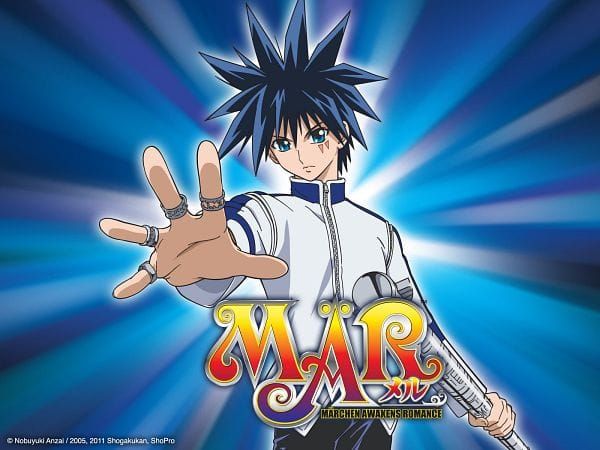
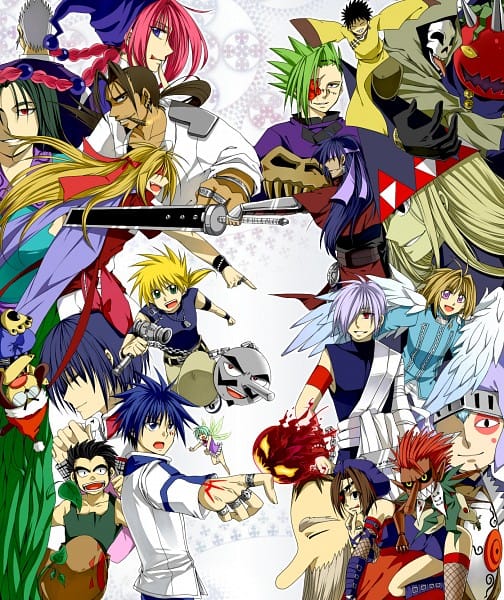
While the authors of Fairy Tail, The Seven Deadly Sins, and Black Clover frequently cite Dragon Ball as their primary inspiration, the structural DNA of MÄR (Marchen Awakens Romance) is undeniably present in these three works, establishing it as a direct precursor to the modern "Fantasy Shonen" genre.
Here is how MÄR's influence manifests concretely in these series:
1. Fairy Tail: The Direct Spiritual Heir
Although Hiro Mashima (author of Fairy Tail) has not explicitly named MÄR as a sole inspiration, the structural similarities are striking, particularly when compared to his previous work, Rave and Fairy Tail.
- Object-Based Magic System: Just as ÄRMs in MÄR are magical objects with varied functions (transformation, elemental, guardian), the magic in Fairy Tail often relies on specific objects or equipment (Lucy’s celestial keys, Erza’s armours, ice swords). This concept of "magic externalised into an object" is MÄR’s signature.
- Guild vs. Team Structure: Ginta’s MAR team prefigures the guild dynamics of Fairy Tail: a motley crew of mages with complementary powers travelling and undertaking quests.
- Tone and Aesthetics: The blend of humour, fantasy adventure, and tournament-style battles against criminal organisations (the Chess Pieces in MÄR vs. dark guilds or Zeref in Fairy Tail) is a direct evolution of the formula established by Nobuyuki Anzai.
2. The Seven Deadly Sins: Dark Fantasy and Cursed Objects
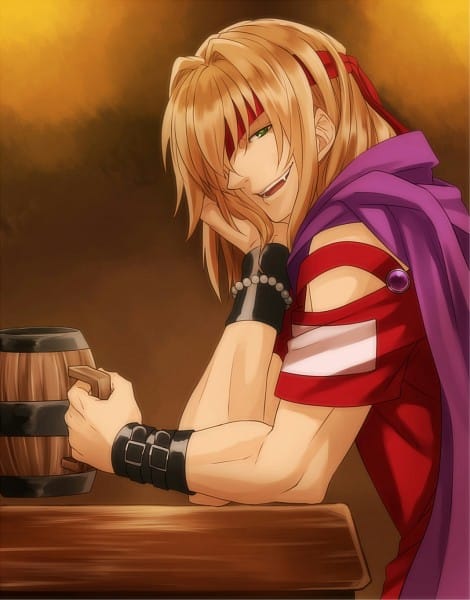 Nanashi inspired Ban
Nakaba Suzuki created a darker work, but the power mechanics remain rooted in MÄR’s legacy.
- Sacred Treasures: The Sacred Treasures of the Seven Deadly Sins function exactly like high-ranking ÄRMs: they are unique weapons or objects, often endowed with a consciousness or specific devastating powers, which only their owner can fully master.
- Antagonist Organisation: The structure of the "Chess Pieces" (a hierarchised organisation with ranked members and unique powers) is mirrored in the Ten Commandments or members of the Kingdom of Camelot, serving as successive "bosses" to defeat.
- Fusion and Transformation: The characters' magical fusion abilities and transformations recall the "Guardian" or "Fusion" type ÄRMs seen in MÄR.
3. Black Clover: Codifying the Genre
While Yūki Tabata cites Dragon Ball and Berserk, Black Clover is arguably the work that most "standardised" the codes initiated by MÄR for the 2010s audience.
- Grimoires vs. ÄRMs: The Grimoire system is a direct evolution of ÄRMs. Every mage possesses a book (object) containing their spells (functions). Like ÄRMs, grimoires are unique, ranked by rarity (number of clovers), and define the character's fighting style.
- Squads and Hierarchy: The division of Magic Knights into Squads with overpowered captains mirrors the structure of the Mär Heaven army and the Zodiac Knights.
- The "Underdog" Hero: If Ginta was physically weak on Earth but powerful in Mär Heaven thanks to Babbo, Asta has no magic but compensates with anti-magic contained in his swords (objects). The schema of a "hero dependent on a unique object/weapon to rival natural mages" is identical.
The Missing Link
MÄR is often considered the missing link between classic 90s shonen (Dragon Quest: Dai no Daibōken, Flame of Recca) and the explosion of modern fantasy.
- It popularised the concept of "combat isekai" (a terrestrial in a magical world) before the term existed.
- It systematised the idea that magic flows through equipment (ÄRMs, Keys, Treasures, Grimoires), making power more tangible and collectible for the reader—a mechanical essential for the commercial success of Fairy Tail, The Seven Deadly Sins, and Black Clover.
The influence of MÄR is therefore not a mere coincidence, but a structural foundation upon which these three pillars of the genre were built.
[https://youtu.be/Es8wPwr-kJY?is=Nm_cz3eWXRqqMXbW]