The Masters of the Video Game Golden Age: Japanese Game Developers in the 1990s
Today, we are talking about the best Japanese Game Devs from the Video Game Golden Era.
IREM: The Planet R-Type
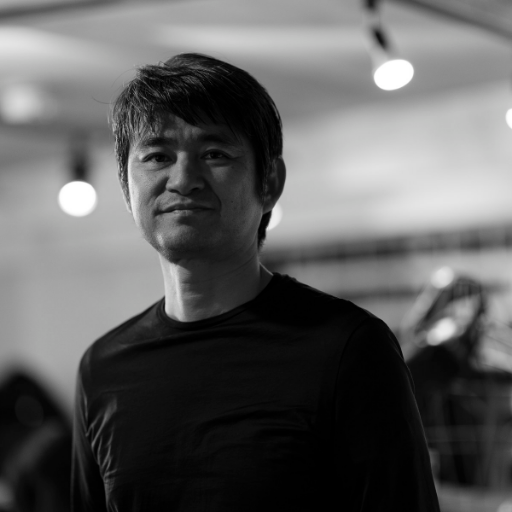
Kujo Kazuma
Kazuma Kujo and Irem, as a collective, significantly revolutionized video games through their innovative approaches to game design, particularly within the arcade and shoot 'em up genres.
Here's a breakdown of their impact:
Irem's Revolutionary Contributions:
- Pioneering Technical Innovations: Irem was known for pushing technical boundaries in arcade gaming.
- Parallax Scrolling: In 1982, their game Moon Patrol was one of the first arcade games to introduce parallax scrolling. This technique created a convincing sense of depth by moving background layers at different speeds, a visual effect that became a staple in side-scrolling games.
- Advanced Shoot 'em Up Mechanics: With R-Type (1987), Irem revolutionized the horizontal shoot 'em up genre. The introduction of the "Force Pod" mechanic was groundbreaking. This detachable, indestructible orb could be used for both offense and defense, allowing for strategic gameplay and unique attack patterns that were unprecedented at the time.
- Setting New Standards for Difficulty and Design:
- Challenging Gameplay: Irem games were renowned for their high difficulty, demanding precision and mastery from players. This focus on challenging gameplay encouraged repeat plays and fostered a dedicated player base.
- Influential Game Design: Beyond R-Type, Irem's titles like Kung-Fu Master (1984) are often credited as pioneering the beat 'em up genre, influencing later iconic titles like Double Dragon and Final Fight. Their submarine-based shooter In the Hunt (1993) also brought bullet-hell mechanics into an underwater setting and directly inspired the detailed 2D art style and design of the Metal Slug series.
Kazuma Kujo's Role and Influence:
Kazuma Kujo was a pivotal figure within Irem and continued to shape the industry after his time there.
- Key Developer at Irem: While specific individual contributions within Irem's early successes can be hard to pinpoint due to collective crediting practices, Kazuma Kujo was a significant developer involved in the creation of influential Irem titles, including the R-Type series. His work contributed directly to the innovative mechanics and challenging design that defined Irem's legacy.
- Influence on Metal Slug: After Irem, many former Irem employees, including Kazuma Kujo, formed Nazca Corporation, which developed the original Metal Slug. When SNK acquired Nazca, this team continued to work on the Metal Slug franchise. This direct lineage means that Irem's distinctive detailed 2D art style, challenging run-and-gun gameplay, and unique enemy designs, heavily influenced by developers like Kujo, were carried over and further developed in the highly acclaimed Metal Slug series.
- Post-Irem Legacy: Kujo later founded Granzella, a company formed from former Irem staff. Granzella has continued to develop games that carry the spirit of Irem, including new entries in the Disaster Report and R-Type series (R-Type Final 2 and R-Type Final 3 Evolved). This demonstrates his ongoing commitment to the genres and design philosophies that Irem helped establish.
Sega: The Golden Age of Arcade and Console Pioneers
Sega emerged as a major innovation hub in the 1990s, thanks to several internal development teams led by renowned creators.
Yu Suzuki (Born 1958)
Regarded as one of the founding fathers of 3D gaming, Yu Suzuki had a remarkable career at Sega, which he joined in 1983.
- The 80s-90s at Sega: He designed numerous groundbreaking arcade machines that made gaming history: Hang-On (1985), Space Harrier (1985), Out Run (1986), and After Burner (1987). He subsequently revolutionised 3D gaming with Virtua Racing (1992) and notably Virtua Fighter (1993), which established the foundations for 3D fighting games.
- The Turn of the Millennium: With the Dreamcast, he spearheaded the ambitious Shenmue (1999) project, an epic adventure game that revolutionised open-world gaming but failed to achieve the anticipated commercial success.
- Post-Sega: After departing Sega in 2011, he established his own studio, Ys Net. Following a successful crowdfunding campaign, he released Shenmue III in 2019, nearly two decades after the second instalment.
Yuji Naka (Born 1965)
Co-creator of Sega's iconic mascot Sonic, Yuji Naka was a central figure at Sega for over 20 years.
- The 90s at Sega: Having joined Sega in 1984, he served as lead programmer on Sonic the Hedgehog (1991), marking the beginning of Sega's rivalry with Nintendo. He subsequently led the Sonic Team in developing titles such as Sonic the Hedgehog 2 and Sonic Adventure.
- Post-Sega: In 2006, he left Sega to establish his own studio, Prope, where he worked on games like Let's Tap and Rodea the Sky Soldier.
- The 2010s-2020s: He joined Square Enix in 2018 to direct Balan Wonderworld (2021), which proved to be both a critical and commercial failure. He departed Square Enix shortly thereafter and became embroiled in an insider trading legal dispute.
Tetsuya Mizuguchi (Born 1965)
Known for his artistic approach and work on musical and rhythm-based games.
- The 90s at Sega: After joining Sega in 1990, he produced successful arcade games including Sega Rally Championship (1995) and Sega Touring Car Championship. He also created Space Channel 5 (1999).
- Post-Sega: Upon leaving Sega in 2003, he founded Q Entertainment, where he created critically acclaimed games such as Lumines and Rez. He later became a virtual reality gaming specialist and established his current studio, Enhance Games, developing Tetris Effect and Rez Infinite.
SNK: The Fighting Game Kingdom
SNK dominated the arcade and high-end home console market in the 90s, particularly with its Neo-Geo console and iconic fighting games. Development teams often remained anonymous or were credited collectively.
- The Metal Slug Team: The original Metal Slug (1996) was developed by Nazca Corporation, comprising former Irem employees. Following SNK's acquisition of Nazca, this team became responsible for the Metal Slug franchise. Notable figures include Kazuma Kujo and Meeher, who continued working on the series.
- The King of Fighters Team: The franchise was developed by SNK's core team, incorporating characters from other successful series like Fatal Fury and Art of Fighting. Toyohisa Tanabe was a key figure during this period, credited for his contributions to the series. Following SNK's bankruptcy in 2001, some team members continued working on the franchise under the new entity SNK Playmore.
NEC: PC Engine's Technological Innovation
NEC, in partnership with Hudson Soft, launched the PC Engine console (known as TurboGrafx-16 in North America) and produced numerous iconic games, though the company's structure makes identifying individual developers more challenging.
- Hudson Soft and the PC Engine: The console was jointly designed by NEC and developer Hudson Soft. Hudson Soft is particularly known for the Bomberman franchise, whose success significantly contributed to the console's popularity. Producer and programmer Yoshiaki Inagaki played a crucial role in developing Bomberman games for the console.
- Development Teams: The PC Engine attracted numerous third-party developers such as Konami and Taito. Within NEC, developers were often less prominent than producers or system designers, a common practice at the time that makes tracking individual careers challenging.